

A featured contribution from Leadership Perspectives: a curated forum reserved for leaders nominated by our subscribers and vetted by the Construction Tech Review Advisory Board.

Deloitte Asia Pacific Digital Reality Leader
Digital reality: The time is now

Dharmendra Magasvaran
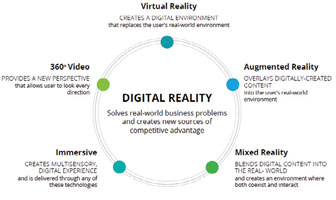
At Deloitte, we have trademarked the term “digital reality” to describe the use of digital technologies in this future world. Digital reality encompasses Virtual Reality (VR), Augmented Reality (AR) and Mixed Reality (MR) as illustrated below:
The Impact of digital reality
The different facets of digital reality vary in their maturity. At present, VR is more mature than AR. We expect that AR will soon overtake VR in terms of mainstream adoption. According to research by Deloitte Digital, AR is expected to generate direct revenues of USD $1 billion by 2020. The shift has already started with major companies like Apple and Facebook, and new players like Magic Leap, already investing millions in AR technology.
There is a common perception that the application of digital reality is only relevant to the entertainment, media and gaming industries. This is proving less so today. Digital reality is now increasingly applied across all industries as businesses look to embrace emerging digital technologies to drive business value.
The application of digital reality can impact businesses in a variety of ways:
Guidance and collaboration: From physical presence to telepresence, digital technologies have drastically changed how we work with one another. In a few years, virtual presence will become a reality, which in turn provides capabilities to further bridge teams working across borders. Early adopters of this technology include Facebook Spaces and Rumii.
Immersive learning and training: With the commoditisation of digital reality hardware and software, businesses are able to train workers in highly valued or dangerous environments virtually.
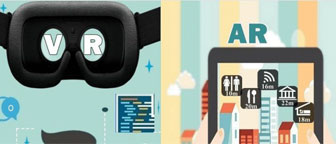

Design and analysis: The advent of 3D printing has shortened physical product prototyping from weeks to hours. Digital reality will further shorten the time to “here and now”. As an example, architects and urban planners can use new VR to design buildings and infrastructures faster with the same or even enhances accuracy.
Enhanced customer experience: Digital reality is all about “enhancing the experience”, be it for the businesses’ employees, stakeholders or customers. For instance, AR can be leveraged to improve a customer’s journey by enabling the customer to visualise the products prior to making a purchase. By enhancing the whole end-to-end user experience, businesses can better connect with both offline and digital worlds in an engaging way.
Getting it Right
There is no lack of information available on how a business can start to adopt digital technologies. The key is to know the technology, and know how it can benefit the organisation – employees, stakeholders and customers alike. Begin with the end in mind and a clear view of what the opportunities could look like.
The fear of failure is a common roadblock, particularly concerns around logistics and perceived costs involved in adopting new technologies. This fear is often unfounded, as digital reality is a spectrum and not all options require specialised equipment. Also, the prices of these equipment are on the decline due to increased adoption.
Another roadblock is having unclear expectations. Businesses should recognise that there are different ways to measure the success of digital reality, not just in terms of revenue. For instance, customer enjoyment and “buzz” created are also relevant measures. In this case, having an experimentation, “test and learn” mindset is critical to ensure that any failure happens fast, and that there are insights and takeaways to be gained at each and every step of the way. From learnt experiences, the journey forward can be done in a controlled manner.
To conclude, we would like to suggest some tips for business leaders:
Don’t fall in love too soon: Digital reality can be very exciting. It would be prudent to downplay the wonders brought about by fancy technology when engaging with stakeholders. Instead, focus on how the specific technology can be leveraged to drive business value.
Don’t be too much of a sceptic: If enthusiastic stakeholders express their big ideas on how technology can benefit the business, help them navigate away from a purely technical standpoint to incorporate a hybrid perspective that includes business value. Guide them through their experimentation process and support them should there be many failures before success.
Don’t try to do it all alone: Digital reality is maturing very quickly and key building blocks such as the right talent, content, software and hardware need to be established. Specifically, talent that can support digital reality initiatives are in hot demand and it is important to develop the experience to manage such a team to deliver value to the business. Leveraging industry partners that can support the business with both the expertise and the necessary technology solution to run a short-term campaign, prototype workshop, or series of sprints can be a great way to begin the digital reality journey and avoid a substantial investment upfront.
